Эх сурвалж: www.bloomberg.com
Mongolian Mining Corp. received approval from the Hong Kong Stock Exchange for a $1 billion initial public offering, the first by a Mongolian company in the territory, according to two people familiar with the IPO.
Mongolian Mining, formerly known as Energy Resources, plans to list as much as 25 percent of its freely traded shares after the initial sale, said the people, who declined to be identified because the information is not yet public.
No companies based in Mongolia are currently listed in Hong Kong, according to data compiled by Bloomberg. The IPO would come after Moscow-based United Co. Rusal in January became the first Russian company to go public in the territory, where Ernst & Young LLP projects IPOs will reach a record.
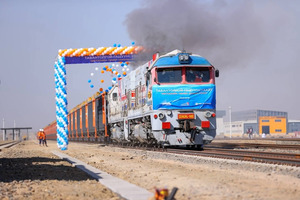
Mongolia will connect a new coal mine to the national rail network rather than build a direct link to China because authorities want to avoid over dependence on their southern neighbor, a New York-based research group said.
International advisers said a link from the Tavan Tolgoi coal deposit, 200 kilometers (124 miles) from the Chinese border, should go directly to its expected market, China, EurasiaNet.org said in an article posted on its website. Mongolia had been working with Deutsche Bahn AG to build a line using the Chinese rail gauge instead of the wider track used in Mongolia and Russia, the article said.
Mongolian leaders feared that a direct link to China would leave the country with too much economic dependence, the article said. Mongolia has 2.6 million people while China, the world’s second-biggest economy, has a population of more than 1.3 billion. China considered Mongolia part of its territory until the middle of the last century.
New York has no legal authority to collect property taxes on foreign missions to the United Nations, a U.S. appeals court ruled, overturning judgments for $42.5 million against India and $4.4 million against Mongolia.
A three-judge panel of the court today reversed lower court rulings that allowed the city to tax the parts of foreign diplomatic missions that are used to house employees and their families.
In the decision, the court said a 2009 U.S. State Department notice that established exemptions from real estate taxes preempts state and local laws and applies retroactively to taxes already assessed.
“The city’s tax liens are invalid and no taxes on property owned by foreign governments and used to house staff of permanent missions to the United Nations or of consular posts are due and owing,” Judge Guido Calabresi wrote.
SouthGobi Resources Ltd., backed by China’s sovereign wealth fund, aims to get a mining license for a second coal pit in Mongolia by the year-end.
The company will apply for a permit for the Soumber deposit in the coming months, Chief Executive Officer Alexander Molyneux said at a media briefing in Hong Kong today. About $205 million is needed to develop the mine, he said.
The Toronto and Hong Kong-listed coal producer already operates a pit at Ovoot Tolgoi, also in the deserts of southern Mongolia. The nation, bordering China and Russia, has some of the world’s largest untapped mineral resources.
Ivanhoe Mines Ltd., developing the Oyu Tolgoi mine in Mongolia with Rio Tinto Group, said copper will outperform gold because of Chinese demand and the nascent electric car industry.
“We need more copper in the next 20 years than was mined in the last 110 years,” Ivanhoe Chairman Robert Friedland said today at the Diggers and Dealers conference in Kalgoorlie, Western Australia. “Those of us in the business don’t have any idea where this metal is going to come from.”
Ivanhoe Mines Ltd., developing the Oyu Tolgoi mine in Mongolia with Rio Tinto Group, said copper will outperform gold because of Chinese demand and the nascent electric car industry.
“We need more copper in the next 20 years than was mined in the last 110 years,” Ivanhoe Chairman Robert Friedland said today at the Diggers and Dealers conference in Kalgoorlie, Western Australia. “Those of us in the business don’t have any idea where this metal is going to come from.”
The Oyu Tolgoi mine, described by Rio Tinto as the world’s largest untapped copper and gold resource, is expected to produce an average 1.2 billion pounds of copper annually for the first decade. Copper futures in London and gold prices have gained 23 percent and 25 percent, respectively, in the past year.
Aluminum Corporation of China Ltd., the nation’s biggest producer of the metal, suspended its shares from trading pending an announcement on an “important discussion.”
Shares of the company that’s known as Chalco are expected to resume trading in Hong Kong and Shanghai on July 30, the Beijing-based company said in a statement.
Chalco’s parent company, known as Chinalco, is in talks with Rio Tinto Group to buy a stake in the $4.6 billion Oyu Tolgoi mine in Mongolia or the U.K. company’s partner in the project, Ivanhoe Mines Ltd., London-based Rio said July 7.
Chinalco has “indicated an interest in acquiring a minority equity stake in the company or acquiring, from the company, a direct minority ownership interest in the Oyu Tolgoi project,” Rio said at the time in a U.S. Securities and Exchange Commission filing, referring to Ivanhoe.
Fluor Corp., the largest publicly traded engineering and construction company in the U.S., may reach a record backlog of projects this year on energy industry demand, Chief Operating Officer David Seaton said.
Mining-related work that included deals in Mongolia and Chile were part of $9.3 billion in projects won in the second quarter, Fluor said today as it reported a profit that beat analysts’ estimates. The total eclipsed the mark of $8.8 billion from the last three months of 2008.
“The real bright spot that I see in the future is oil and gas,” Seaton said in an interview at Fluor’s headquarters in Irving, Texas. “We have the potential to break through that historic level during this year.”
Giorgio Armani SpA, the Italian fashion company whose clothes are worn by celebrities including Angelina Jolie and Leonardo DiCaprio, said it opened its first stores in Mongolia and Vietnam as it seeks to tap Asian demand.
Emporio Armani boutiques opened in Ulan Bator, Mongolia and Ho Chi Minh City, Vietnam, where the clothier also added a cafe, the Milan-based company said today in two e-mailed statements, without saying when the outlets began trading.
Ivanhoe Mines Ltd. plans to scrap an accord limiting its ability to bring new investors into the $4.6 billion Oyu Tolgoi mining project in Mongolia, intensifying a dispute with Rio Tinto Group, its largest shareholder.
Ivanhoe issued Rio a 60-day notice of intention to dissolve the so-called strategic investor covenant, which governs Rio’s investment in the company, Vancouver-based Ivanhoe said today in a statement. Termination would free Ivanhoe to issue more than 5 percent of its stock to one or more investors, it said. Ivanhoe rose 14 percent in Toronto trading.
Rio, which owns 30 percent of Ivanhoe, said last week it was taking Ivanhoe to arbitration over a shareholders plan implemented by the Canadian company. At stake is the ownership of Ivanhoe and Oyu Tolgoi, which has been described by Rio as the world’s largest untapped copper and gold resource.
“Rio Tinto has been a supportive strategic partner for Ivanhoe in advancing the Oyu Tolgoi Project to full-scale construction,” David Huberman, lead independent director at Ivanhoe, said in the statement. “We intend to continue our cooperation as we pursue additional financing options.”
Ivanhoe also said Andrew Harding, chief executive officer of Rio’s copper division, resigned from Ivanhoe’s board prior to its meeting yesterday.
Aluminum Corp. of China, China’s biggest producer of aluminum, indicated an interest in acquiring a minority stake in Ivanhoe or in the Oyu Tolgoi project, Rio said in a July 7 filing. Chinalco, as the Chinese company is also known, is Rio’s biggest investor.
Sojitz Corp. will boost coal trading by about 18 percent after the Japanese trading company won an agreement from Prophecy Resource Corp. to market the fuel to China from a Mongolian mine.
Coal trading will rise to about 20 million metric tons a year in the year starting April 1, 2012, from 17 million tons, Yoshikazu Ichikawa, a spokesman for the Tokyo-based company, said today in a phone interview. Sojitz agreed to jointly market power station coal from its Canadian partner’s 208 million-ton Ulaan Ovoo coal deposit, according to a June 7 statement.
Mongolia plans to sell 30 percent of a company controlling the Tavan Tolgoi coking coal deposit in share sales to help fund $1.5 billion of initial development cost, the mining minister said.
The share offerings may take place overseas or in Mongolia and a government-owned company will retain a 40 percent stake, Minister for Minerals and Energy Dashdorj Zorigt said in a telephone interview, after a parliamentary vote yesterday. The rest will be offered to local businesses and the public, he said, without giving details.
Shenhua Group Corp., China’s biggest coal producer, expects profit to exceed 100 billion yuan ($15 billion) by 2013 as the company develops projects in Australia, Indonesia, Mongolia and Russia.
The company has a revenue target of 300 billion yuan for 2013, according to notes in a speech to be delivered tomorrow by Li Jingping, general manager of coal transport and sales, at a coal conference in Dalian city.
Profit may reach 45 billion yuan in 2009, Zhang Xiwu, chairman of the parent of Hong-Kong listed China Shenhua Energy Co., said last year. Peabody Energy Corp., the biggest U.S. producer, reported a net income of $448 million in 2009. Shenhua is developing overseas projects to meet demand for coal, used to generate 80 percent of China’s power, after the nation became a net importer of the fuel for the first time in 2009.
Gold will climb to a record $1,300 an ounce in the coming weeks as investors sell the dollar, and may advance to $1,500 by the end of 2010, according to a technical analysis by Credit Suisse Group AG.
Bullion may jump to $1,500 an ounce, 19 percent more than the record $1,262.50 set on June 18, before investors see gold as a “bubble,” said Michael Macdonald, technical analyst with Credit Suisse, citing momentum indicators.
The metal’s 14-day relative strength index, which compares gains and losses on a weekly basis, advanced to a one-month high of 68.195 on June 18. A level of more than 70 is seen by some investors as a signal that prices are about to drop.
“The trend is quite dominant and well-defined, as the momentum is strong and the RSI is trending higher,” Singapore- based Macdonald said in an interview. “If it hits $1,500 by the end of the year, it will create a bubble scenario and that could be a bit panicky.”
China, the world’s second-biggest energy user, increased coal imports by 17 percent in May because of a rebound in the economy.
Coal purchases rose to 11 million metric tons in May from a year earlier, according to data released today by the General Administration of Customs. Imports reached a record 16.4 million tons in December, Bloomberg data showed.
China paid an average $109 a ton for delivered coal in May, about 11 percent higher than the previous month, according to the data. The country paid $77 a ton for the fuel a year earlier, reflecting a surge in coal prices as China turned into a net importer last year.
The nation imported as much as 126 million tons of coal last year after being a net exporter in the past, as mine closures, high local freight rates and an increase in domestic prices gave Indonesia and Australia a price advantage, Richard Morse, who leads coal market research at Stanford University, said last month.
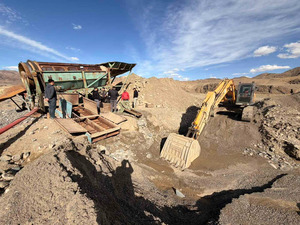
Mongolia is seeking investors for a $10 billion desert industrial complex that will meet rising Asian demand for coal and copper from some of the world’s largest untapped mineral resources.
A copper smelter, oil refinery, power plants and chemical coking facilities are planned at Sainshand in the Gobi desert to do value-added processing for the Tavan Tolgoi coking coal deposit and Oyu Tolgoi copper mine, said Ganbat Chuluunkhuu, a government adviser and former Wall Street financier with Commerzbank AG.
The Mongolian government wants investors to fund as much as 40 percent of the project that will build 1,000-kilometers (650 miles) of railroads through south Gobi and eastern Mongolia, connecting Tavan Tolgoi to China and Russia, Chuluunkhuu said in an interview in the capital city Ulan Bator.
“Mongolia can become the Kuwait of central Asia,” Chuluunkhuu said yesterday. “All the resources are there, and all the buyers are there. The only missing part is to get everybody organized, prepare all the documentation that meets international practice. It’s doable.”
Tavan Tolgoi holds about 6 billion metric tons of coal in the deserts of southern Mongolia, making it one of the world’s largest unexploited reserves of the fuel.
Mongolia’s government scaled back its plans for global bond sales this year, after Europe’s debt crisis drove up borrowing costs.
The government plans to raise $500 million selling bonds this year and the remainder of its $1.2 billion program according to market conditions, Batbayar Balgan, director general of the financial and economic policy department of Mongolia, said at a forum in Ulan Bator today. Finance Minister Sangajav Bayartsogt said in February that Mongolia planned to sell as much as $1.2 billion of bonds overseas this year, its first benchmark offering of dollar-denominated debt.
Mongolia’s plan to privatize its state-owned assets will allow international investors access to some of the world’s largest untapped mineral resources through initial public share sales, most likely in Hong Kong.Dulam Sugar, chairman of the Government of Mongolia’s State Property Committee, said even though the procedure of equity listings hasn’t been confirmed, the Mongolian government has decided to sell shares in both local and international stock markets.
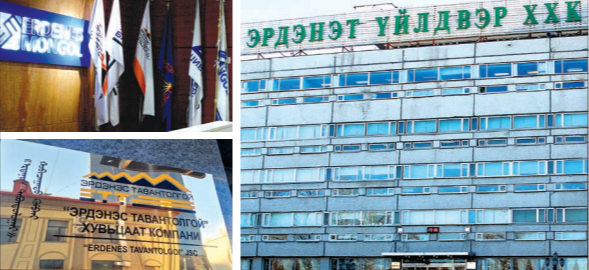
Sugar named Erdenet Mining Corp., a Mongolian-Russian copper producer joint venture, the Tavan Tolgoi coking coal deposit and the Oyu Tolgoi copper mine as the nation’s biggest state-owned assets to be privatized. Uranium companies may also be privatized.
“Mongolia doesn’t have anybody who has offered shares in international markets yet, that’s why we are very cautious,” Sugar said yesterday in an interview in the Mongolian capital of Ulaanbaatar. “We are asking international investors to invest now, particularly those from Hong Kong.”
Lawrence Fok, Hong Kong Exchanges & Clearing Ltd.’s chief marketing officer, said he has met with Mongolian mining companies seeking to list on the city’s bourse.Fok had the meetings in the Mongolian capital of Ulaanbaatar, where he’s attending a forum on corporate capital raising. He declined in an interview to name the companies or give a time frame for their possible listings.
“Hopefully there will be more companies using Hong Kong as a platform,” Fok said. “Mongolia and other resource-rich countries share the same characteristics of having a small population and massive resources, which would benefit from China’s economic growth and its rising demand for resources.”
Mongolia wants a state-controlled company to own a “significant percentage” of Tavan Tolgoi, an untapped coking coal deposit that has attracted the interest of the world’s biggest mining companies.
A bill has been submitted to parliament suggesting part of the deposit is to be controlled by a state-run enterprise while a second tranche is to be operated by a group of foreign and domestic companies, Minister for Minerals and Energy Dashdorj Zorigt said in a telephone interview today.
Tavan Tolgoi holds about 6 billion metric tons of coal in the deserts of southern Mongolia, making it one of the world’s largest unexploited reserves of the fuel. Mongolia, which shares a border with China and Russia, is seeking greater control over its resources and said this year it wants to retain ownership of new mines.
Ivanhoe Mines Ltd., which is developing the Oyu Tolgoi mine in Mongolia with Rio Tinto Group, increased 4.7 percent to C$14.35. The company said it may receive as much as $300 million in financing from both the European Bank for Reconstruction and the International Finance Corp.
Ivanhoe Mines Ltd., building a $4.6 billion copper and gold mine in Mongolia with Rio Tinto Group, said it may bring in another partner after receiving interest in the Oyu Tolgoi project.
“This is likely to have another participant before it’s all over,” Deputy Chairman Peter Meredith said today at a conference in London. “We’ve had a lot interest from other majors but our partner is Rio Tinto so we have to be respectful of what their dreams and desires are.”
The company spent more than six years negotiating an accord with Mongolia over the project, which Rio has described as the world’s largest untapped copper and gold resource. Ivanhoe said in January it hired Citigroup Inc. to study options, including debt and equity offerings and asset sales. The company wants to maintain control of the project, Meredith said.
It may make sense for Chinese interests to study investment in the mine, he said. SouthGobi Resources Ltd., a coal producer in Mongolia 57 percent-held by Ivanhoe, last year sold $500 million of convertible bonds to China Investment Corp., the sovereign wealth fund of the world’s most populous nation.
Ivanhoe Mines Ltd., planning to develop deposits in Mongolia with Rio Tinto Group, will produce 1.2 billion pounds of copper annually at a project it says will be one of the world’s largest copper and gold mines.
The Oyu Tolgoi project also is expected to produce more than 650,000 ounces of gold a year for the 10 years starting in mid-2013, Vancouver-based Ivanhoe said today in a statement. The mine will require an additional investment of $4.6 billion before commercial output starts, the company said.
Ivanhoe spent more than six years negotiating an agreement with the Mongolian government on Oyu Tolgoi, which Rio has described as the world’s largest untapped copper and gold resource. The 81.3 billion pounds of copper and 46.4 million ounces of gold contained in the Oyu Tolgoi site may allow operations to continue for 59 years, Ivanhoe said.
The volumes announced by Ivanhoe “would put them in the top tier,” Bart Melek, a commodity strategist at Bank of Montreal in Toronto, said in a telephone interview. Oyu Tolgoi “is a world-class asset” in the same league with the Grasberg mine in Indonesia, which is run by Freeport-McMoRan Copper & Gold Inc., and the BHP Billiton Ltd.-controlled Escondida project in Chile.
Rio Tinto Group spent 2008 trying to sell assets as it strained to cut ballooning debt. Chief Executive Officer Tom Albanese now has the opposite challenge — to decide how to spend his swelling pile of cash.
Strikeforce Mining & Resources Plc, a Russian molybdenum producer controlled by billionaire Oleg Deripaska, is gauging demand for an initial public offering in Hong Kong that may raise as much as $200 million, said a person with knowledge of the plan.
The company, known as SMR, may start taking orders from institutional investors as early as next week, according to the person, who declined to be identified because the information isn’t public. BOC International Holdings Ltd., the investment banking unit of Bank of China Ltd., Deutsche Bank AG and Renaissance Capital are managing the sale, the person said.
Hunnu Coal Ltd., an Australian company developing coal mines in Mongolia, is studying the sale of shares in Hong Kong next year to fund new operations.
“The plan is to dual-list it on the Hong Kong stock exchange, middle to late-next year,” Chairman Matthew Wood said today in an interview in Bloomberg’s Melbourne bureau. The company sold A$20 million ($19 million) in shares in an initial public offering and began trading in Australia in February.
Hunnu may join other Mongolia-focused mining companies including SouthGobi Energy Resources Ltd., the Canada-listed mining company backed by China’s sovereign wealth fund, and Energy Resources LLC in seeking capital by listing in Hong Kong. Coal prices doubled and shipments to China tripled last year.
Mongolia, seeking $25 billion to develop metal and coal resources, suspended the issuance of mining licenses and barred the practice of transferring the permits as companies fail to explore for minerals.
President Tsakhia Elbegdorj gave the orders as head of the National Security Council, according to a statement posted on the presidential Web site. The freeze will remain in place until a new law is passed, the statement said, without saying when legislation may come into effect.
Mongolia, which shares a border with China and Russia, is seeking greater control over its resources and this year said it wants to retain ownership of new mines and sell shares in state- owned producers. Rio Tinto Group and Ivanhoe Mines Ltd. are developing the Oyu Tolgoi copper mine in the country.
“Almost half of the exploration license holders neglect their legal duty to provide their annual exploration reports,” the president said in the statement dated April 23. “Ignorant of their main duty to explore for minerals, the license holders have turned mineral licenses into a money-making tool for foreign and national groups. It is possible that corruption and bribery are committed in those circles.”
Russia and the economies of the former Soviet republics will recover at a “moderate pace” this year as financial-industry weakness offsets a rebound in trade and higher energy income, the International Monetary Fund said.
Russia’s gross domestic product will expand 4 percent this year, the IMF said in a report today, revising its previous forecast for 3.6 percent. The Washington-based lender predicted a gain of 4 percent for the economies of Mongolia, Georgia and the Commonwealth of Independent States, a grouping of post- Soviet nations.
“For most CIS economies, growth prospects remain highly dependent on the speed of recovery in Russia, which could surprise in either direction,” the report said. “Economies with less externally linked financial sectors are expected to continue to do best.”
SouthGobi Energy Resources Ltd., the Canada-listed mining company backed by China’s sovereign wealth fund, may post “robust” earnings starting next year as production expands, its chief executive officer said.
Earnings will be “neutral” this year, Alexander Molyneux said in an interview in Beijing today, without elaborating. Performance still depends on the price of coking coal, used in steelmaking, he said.
SouthGobi, listed in Hong Kong since January, posted a bigger loss last year after the startup of its Ovoot Tolgoi mine in southern Mongolia increased costs. The company plans to produce about 14 million metric tons of unprocessed coal in Mongolia in 2013, compared with 1.3 million tons last year, Molyneux said.
Mongolia will develop its biggest untapped uranium field in a venture with Russia after revoking Khan Resources Inc.’s permit to exploit the Dornod resource.
The Asian country’s state-owned KOO MonAtom will hold at least 51 percent in a venture with Russia’s government-run ARMZ Uranium Holding and possible partners from Japan or China, according to Mongolia’s Nuclear Energy Agency. Bayarbayasgalan Tudevbazar, nuclear materials chief at the agency, commented in an e-mailed response to questions on April 9.
Toronto-based Khan Resources said yesterday a unit had its Dornod license annulled after accusations it failed to deal with breaches of the law. The company denied any violations and said it would challenge the agency’s decision. Spokesman Jonathan Buick didn’t respond to e-mails seeking comment.
Development of some of the world’s largest untapped mineral resources has been delayed in Mongolia by political infighting and a lack of funds. The nation plans to set up companies to manage the resources and may sell shares to global investors, Prime Minister Sukhbaatar Batbold said in February.